How to Evaluate Fabrication Companies in UAE (Through the Lens of BERG Industries)
- BERG Industries
- Oct 13, 2025
- 9 min read

You step off the asphalt into a yard that hums—plasma tables singing, column cranes gliding, foremen trading hand signals in a choreography you’ve seen before but never quite like this. You’re here to shortlist partners for a multi-stream project—pressure equipment, process skids, structural steel, and a network of utility lines—and the clock is brutal. Your brief is simple: find fabrication companies in UAE that can deliver safely, on spec, and on time, without the usual heartburn.
This walkthrough uses BERG Industries as your vantage point. Not as an ad, but as a working case study to help you frame the right questions and benchmark what “good” looks like across the UAE ecosystem. You’ll touch the valves, read the weld maps, and open the data that matters. Along the way, you’ll see how to assess surge vessels manufacturing companies in UAE, how to separate commodity steel fabrication companies UAE from value-adding partners, and how to judge a piping fabrication workflow that won’t unravel in commissioning.
This is your research field guide—story first, checklists embedded, and practical enough to take to your next technical review.
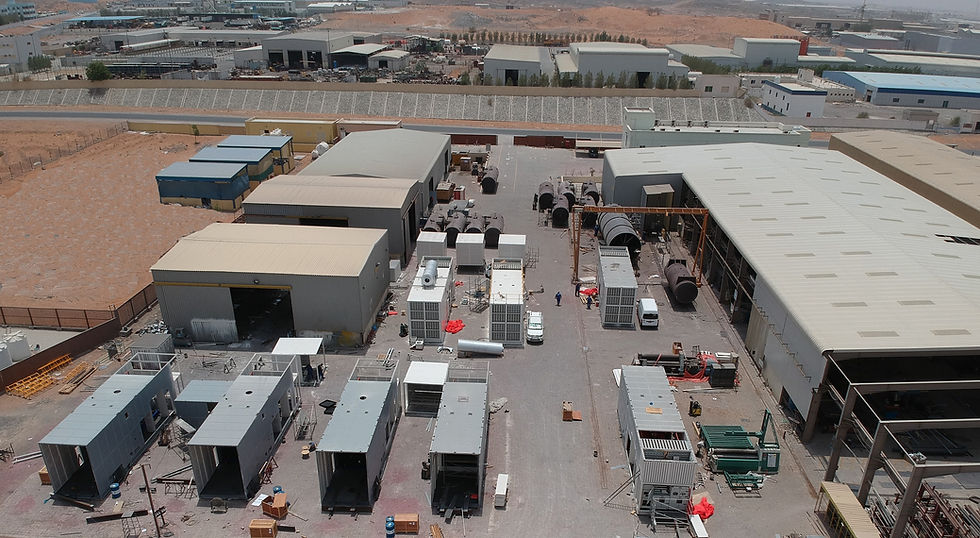
The Gate and the Paper Trail
At reception, you sign a visitor permit and a safety induction pops up on a tablet. It’s short, specific, and current. Good sign. Before anyone talks about tonnage or lead time, you ask for certifications and scope matrices. You want to see:
Quality and welding: ISO 9001; ISO 3834 for welding quality; WPS/PQR/WPQs aligned with your materials and thickness ranges.
Pressure equipment: ASME U/S/R stamps or equivalent where applicable; hydrotest procedures; relief settings; traceability of plate and nozzle materials.
HSE & environment: ISO 14001, ISO 45001; confined space, hot-work permits; waste and fumes capture for the cutting bays.
NDT capabilities: VT, PT, MT, UT, RT access (in-house or audited third party).
Coating & corrosion: blast profiles, DFT records, holiday testing for linings, and a coating procedure that matches your service medium.
Documentation: ITPs, weld maps, MDR templates, data books with heat numbers tied to line classes.
You’re not shopping for brochures; you’re testing the maturity of the system that will keep your project defensible. The UAE market is broad—fabrication companies in UAE range from light-duty job shops to heavy industrial yards. The difference is rarely the CNC machine; it’s the discipline of the paperwork and the repeatability in the floor routines.
Research driver: Ask for one complete MDR from a recently closed job similar to yours. Skim the traceability chain (PO → MTC → cut list → weld map → NDT → hydro → coating → FAT) and time how long it takes you to find any one item. If you can’t trace a nozzle plate in under two minutes, imagine searching it during a site NCR.
The Surge Vessel Bay—Where Small Decisions Become Safety
A foreman walks you to a bay where two cylindrical shells rest on rollers, ends beveled, saddle locations chalked. If you’re comparing surge vessels manufacturing companies in UAE, this is where questions sharpen. Surge vessels look deceptively simple, but performance is in the sizing, internals, and protection strategy.
As you circle the shell, you ask:
Design basis: Are calculations set up for your pump trip scenarios, water hammer profiles, or compressor surge characteristics? Can the team model min/max setpoints for bladder or gas-charged configurations?
Materials & internals: Are shell and head materials aligned to your corrosion allowances? If liners or internal coatings are specified, what’s the cure regime and inspection method?
Nozzles & supports: Are nozzle reinforcements calculated for cyclic loads? Are supports designed for your seismic, wind, and operational vibration conditions typical across UAE sites?
Safety devices: How are relief valves, pressure gauges, and level instrumentation integrated? Any design for maintenance access and isolation?
Testing: What’s the hydrotest pressure margin? How are gas pre-charge and leak checks documented pre-dispatch?
You don’t need a sales pitch. You need to see a consistent logic from calculation package to weld bead to nameplate. If your shortlisted surge vessels manufacturing companies in UAE can talk you through transients and inspection regimes without reaching for the manual, you’re in better hands than most.
Across the Yard—Steel, Fit-Ups, and the Quiet Power of Tolerance
You pass a spread of I-beams, plate girders, and pipe racks laid out like a life-size kit. This is where many steel fabrication companies UAE either shine or struggle. Structural steel is measured in misalignments you won’t see until erection day. Your checklist:
Fit-up philosophy: Are they using calibrated jigs and fixtures for repetitive components? How do they achieve hole tolerance across batches so your site doesn’t turn into a drift-pin festival?
Weld distortion control: Sequence plans for long members; pre-set strategies; intermittent stitch logic where the design allows; bracing during cool-down.
Bolted joints: Are bolt assemblies stored climate-controlled? Are torque/tension methods (turn-of-nut, calibrated wrench, or DTI washers) standardized with inspection records?
Galvanizing/painting flow: Do they account for drain holes and venting to avoid zinc explosions? Can they manage DFT around high-stress areas to avoid brittleness?
Ask to see a batch of fabricated clips placed on a granite table or CMM to check repeatability. For UAE projects with fast-track erection schedules, the best steel fabrication companies UAE are the ones who remove uncertainty from the crane plan.
The Piping Fabrication Line—Line Classes, Heat Numbers, and the Commissioning Test You Don’t Want to Fail
You enter a line where lengths of pipe move from bevel to tack to fit-up to weld. The lead piping engineer points to a digital dashboard: spools pending, WPS applied, welder IDs, NDT status, and queue for hydrotesting. This is where piping fabrication either generates margin for you—or erodes it.
Look for:
Line class compliance: Materials pulled only against specific line classes; substitute logic requires engineering approval with logged deviations.
Heat number traceability: Barcoded or RFID tags from receipt to final data book; cut ends labeled; coupons kept.
WPS coverage: Qualified WPS for base metals, positions, and thicknesses you actually use; PQRs current; welder qualifications tracked by process and position.
GTAW/GMAW/SMAW strategy: More than brand names, you want parameters, interpass temperatures, and purge methods for stainless and alloy spools.
NDT workflow: Real-time status with hold points marked on the ITP; repair logs tied to welder IDs to identify systemic issues.
Hydrotesting: Calibrated gauges; isolation blinds accounted; test packs built with drawings, pressure charts, and signatures complete.
The term piping fabrication is big, but your risk concentrates in two places—traceability and hydro. If you lose either, you lose days you can’t buy back.
Digital Threads, Not Digital Theater
A production manager opens a browser to show job dashboards. If it’s just a Gantt chart, nod politely and ask to see the source data. The question is whether the system is feeding the schedule or the schedule is faking the system.
Can you drill down from a project milestone to the spool, from the spool to the weld, and from the weld to the MTC and welder ID—without opening fifteen spreadsheets?
Are NCRs visible in real time with corrective actions and closure evidence?
Do they push photo evidence of fit-ups, root passes, and final DFT into your MDR automatically?
Fabrication companies in UAE are modernizing, but digital maturity varies. You don’t need glossy dashboards; you need a data backbone that protects you during audits and energization gates.
Coating Yard—Because the Gulf Air Has Its Own Agenda
You move past a blasting chamber where reclaimed grit comes back through a separator, then into a paint booth where DFT gauges hang on hooks like stethoscopes. In coastal or high-salinity industrial corridors, coatings are the armor your equipment wears.
Ask about:
Surface prep: Standards achieved (e.g., Sa 2.5); chloride testing before coating; anchor profiles recorded.
Environmental controls: Temperature, humidity, and dew point monitoring with logs; how often are readings taken and attached to the batch?
System compatibility: Primer to topcoat compatibility and pot life; overcoat windows observed in reality, not just on paper.
Holiday testing and linings: For internal linings and potable service, insist on documented holiday testing and cure schedules.
If the coating yard has immaculate logs but the fixtures make runs and sags inevitable, you’ll get pretty reports and ugly failures. Watch the work, not just the paperwork.
Logistics and Site Reality
You step into a yard where completed skids sit on timber, flange faces protected, desiccant packs tucked under shrink wrap. The last ten percent of a job is often where 100 percent of the pain lives.
Packing plans: Are fragile instruments protected? Are lifting points labeled with load charts? Are center-of-gravity notes on the drawings?
Preservation: Rust preventives, periodic re-application logs if dispatch is delayed; nitrogen blankets where required.
Customs and site access in the UAE: Familiarity with free-zone logistics, wide-load permits, and delivery windows for refineries, power plants, and data center sites.
Consolidation vs. Fragmentation
Your project bundle spans surge vessels, structural steel, and spools. You could hire three separate vendors—or consolidate scope with a single yard that has dedicated bays and audited partners for specialized steps (e.g., RT, galvanizing). The value isn’t the promise of “one throat to choke.” It’s the removal of interface risk—tolerances aligned, weld maps unified, QA language consistent.
In the UAE, where shutdown windows and utility tie-ins are measured in hours, integration beats heroics. If a yard like BERG Industries can prove that your surge vessel internals, skid baseplates, and connecting spools were coordinated by the same planning brain, you reduce the probability of the Saturday-night-drip that turns into a Monday crisis.
A Shortlist Framework You Can Use Tomorrow
Take this with you on your next visit to fabrication companies in UAE:
Scope alignment: Show your P&IDs, GA drawings, and line classes. Ask for a scope split proposal you can challenge.
Capability proof: Walk a live job similar in metallurgy, pressure class, and size—do not accept “we used to.”
System maturity: Sample an MDR from a comparable job; trace one item end-to-end.
People and craft: Speak with the QA lead and a welder. Can both explain the same WPS in different words?
Throughput realism: Ask for the hour-by-hour flow for one representative spool, one beam, and one vessel nozzle set. Check bottlenecks.
Risk log: Request their top five risks for your job and the mitigation plan. If the list is vague, the delivery will be too.
Commercial transparency: Seek milestone-based payments linked to inspection points, not just calendar dates.
Close-out discipline: Review a delivered project’s punch list aging report. How fast do they close Category A items?
Trends You Should Factor Into Your 2025 Procurement
Modularization: More UAE owners are pushing skid-based modules to reduce site work. Ask for modular lifting, transport constraints, and inter-module tolerances from day one.
Low-carbon pressure: Pre-qualify for material choices (e.g., duplex where lifecycle justifies), process gas recycling, and energy-efficient blasting/painting systems.
Data centers & district cooling: Rapid growth strains chilled water and utility pipelines; demand clarity on surge protection and transients in these networks.
Hydrogen-ready philosophies: Even if you’re not building H₂ service today, validate whether materials and procedures could pivot if your asset needs to.
Digital QA sharing: More owners expect real-time MDR portals. Make sure your vendor can grant controlled, read-only access with audit trails.
What Makes a Good Partner (Not a Perfect Plant)
By the time you leave, you won’t be looking for the shiniest bay; you’ll be looking for the team that invites your hardest questions. In a market as dense as the UAE, the differentiator isn’t whether a yard can cut, weld, and paint—most can. It’s whether they can prove that every weld, every thickness, and every datum will stand up to pressure, time, and audit.
Use BERG Industries as one lens among many. Walk the floor, open the data, ask for the MDR, attend the hydro. When you hear the clean thud of a good fit-up and see a welder proud to initial a cap pass, you’ll know you’re close.
Quick Research Checklist (Copy/Paste)
Surge vessels: design transients modeled; internals specified; hydro and leak checks documented; maintenance access considered.
Structural steel: fit-up jigs; distortion control; bolt handling and inspection; galvanizing/paint compatibility.
Piping: heat number traceability; WPS/PQR coverage; interpass control; NDT scheduling and repair analytics; hydro discipline.
Coatings: Sa 2.5; chloride and dew point logs; DFT and holiday tests tied to batches.
Documentation: searchable MDR; weld maps linked to drawings; real-time NCR closure tracking.
Logistics: preservation, lifting, COG notes, UAE permit familiarity.
Commercials: milestones tied to hold points; risk register shared at kickoff.
Bring this into your next vendor meeting with fabrication companies in UAE and you’ll convert a plant tour into a project outcome.
FAQs
1) How do you compare surge vessels manufacturing companies in UAE quickly without deep analysis?
Start with five verifiers: (a) a recent calculation package for a vessel similar to yours, (b) documented internal configuration and inspection plans, (c) hydro/leak test records with gauge calibration certificates, (d) material traceability from MTC to nameplate, and (e) a completed MDR sample. If a vendor can produce those promptly and walk you through logic and failure modes, you’ve already filtered most of the risk.
2) What’s the one mistake teams make with piping fabrication that shows up at commissioning?
Losing heat number continuity on small-bore tie-ins and field welds. Spools ship with perfect documentation, then a quick site modification breaks the chain. Insist that your fabricator’s MDR anticipates field welds with placeholder pages and barcode methods that your site contractor can continue without inventing a new process.
3) When should you favor modular skids over stick-built assemblies in the UAE?
Choose modular when access is tight, shutdown windows are short, or multi-discipline interfaces (mechanical, electrical, instrumentation) need factory testing. UAE sites often have complex permitting and daytime delivery limits—modularization reduces site hours and approvals. Validate transport envelope, lifting studies, and inter-module tolerance strategy up front.
4) What certifications matter most for selecting steel fabrication companies UAE?
Focus on ISO 9001 and ISO 3834 for welding, plus documented welder qualifications for your processes and positions. For structural projects, ask for evidence of controlled fit-up jigs and repeatability checks. If galvanized, request proof of proper vent/drain hole design and galvanizer audit. For pressure-related structures, ensure alignment with relevant ASME sections and inspection points.
5) How do you judge a coating program suitable for Gulf conditions without waiting for failures? Ask for prep and environmental logs from the last three comparable jobs, tied to batch numbers and photos. Verify chloride tests pre-coat, anchor profile measurements, DFT distribution (not just averages), and holiday test results for lined services. If they can show compliant results across varying humidity days—a common UAE reality—you can trust their process more than a single perfect mock-up.


Comments